

The end-of-lease clearout, done before the inspection
About a third of Gladesville rents, so we clear a lot of units in their last week of a lease. This is the manual version of that week: what the agent's walk-through actually checks, how the building's lift and dock get booked, and the countdown that keeps your bond conversation short. Check us against it.
 Everything here works whether you hire us or do the carrying yourself.
How the final inspection actually works
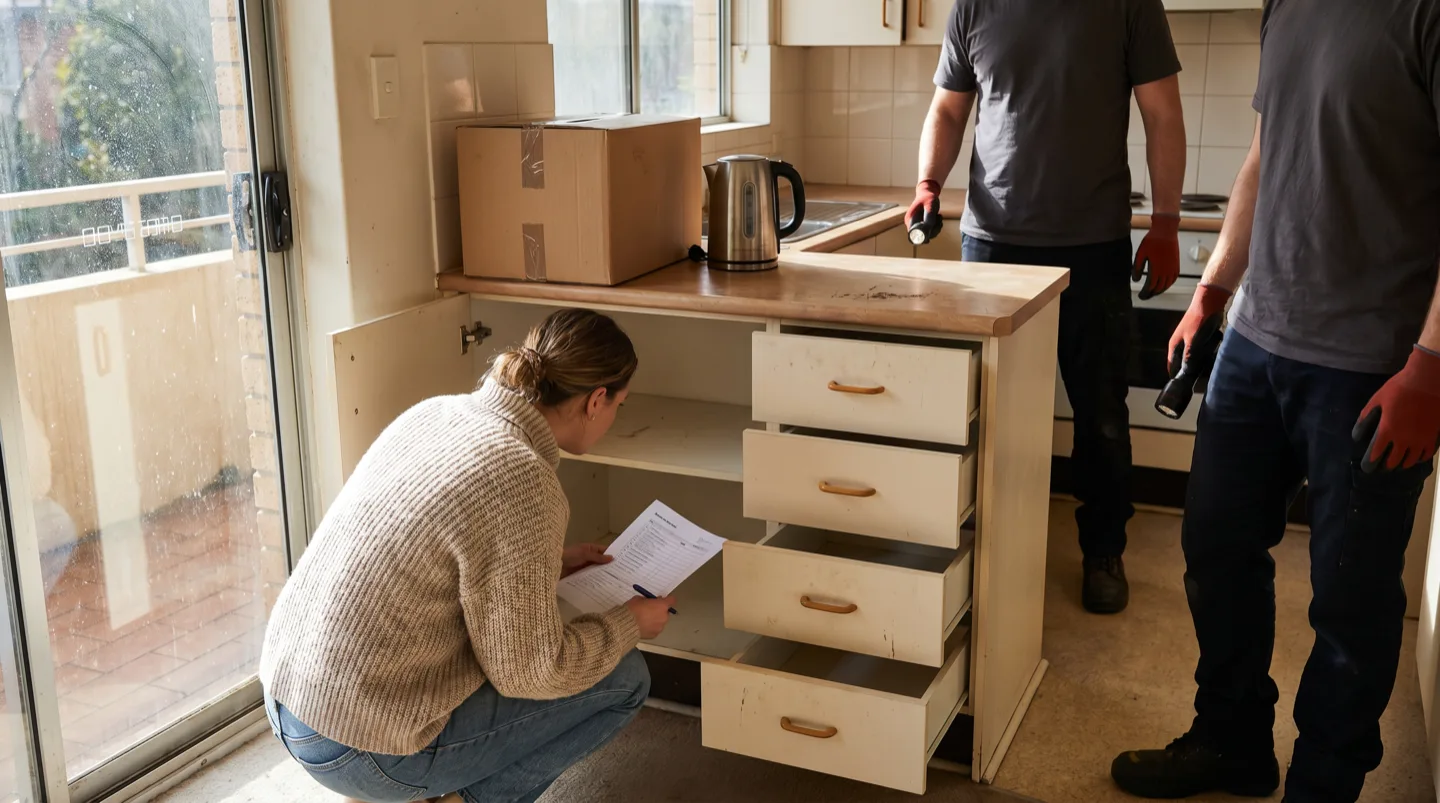
When the lease ends, the agent walks the unit against the condition report you signed on the way in. The walk-through has two halves: the state of the place, which is a cleaning question, and what's still in it, which is ours. Anything left behind stops being your furniture and starts being a problem the agent has to solve, and agents solve problems with your bond.
The good news is that the walk-through is completely predictable. Agents open every door, every drawer and every gate, in roughly the same order, every time. Which means you can run the same walk yourself a week early, with the list below, and there is nothing left for inspection day to find.
Where the walk-through goes, and what it finds
Run this a week out, phone in hand, and photograph each spot once it's empty. Your own photo set is the cheapest insurance a renter can hold.
| Where they look | What gets written up there |
|---|---|
| Kitchen drawers and cupboards | The drawer nobody audits: cables, takeaway cutlery, half a toolkit. Every door gets opened, including the corner cupboard you need a torch for. |
| Under the sink and around the oven | Cleaning products, the bin that isn't the building's, oven trays that came with you and not with the unit. |
| Built-in wardrobes, top shelf included | The wardrobe of maybes, spare doonas, the suitcase that stopped closing. Top shelves get checked by feel if not by eye. |
| Linen press and hallway cupboard | Towels past their best, the ironing board, the vacuum you're replacing anyway, the mop and bucket. |
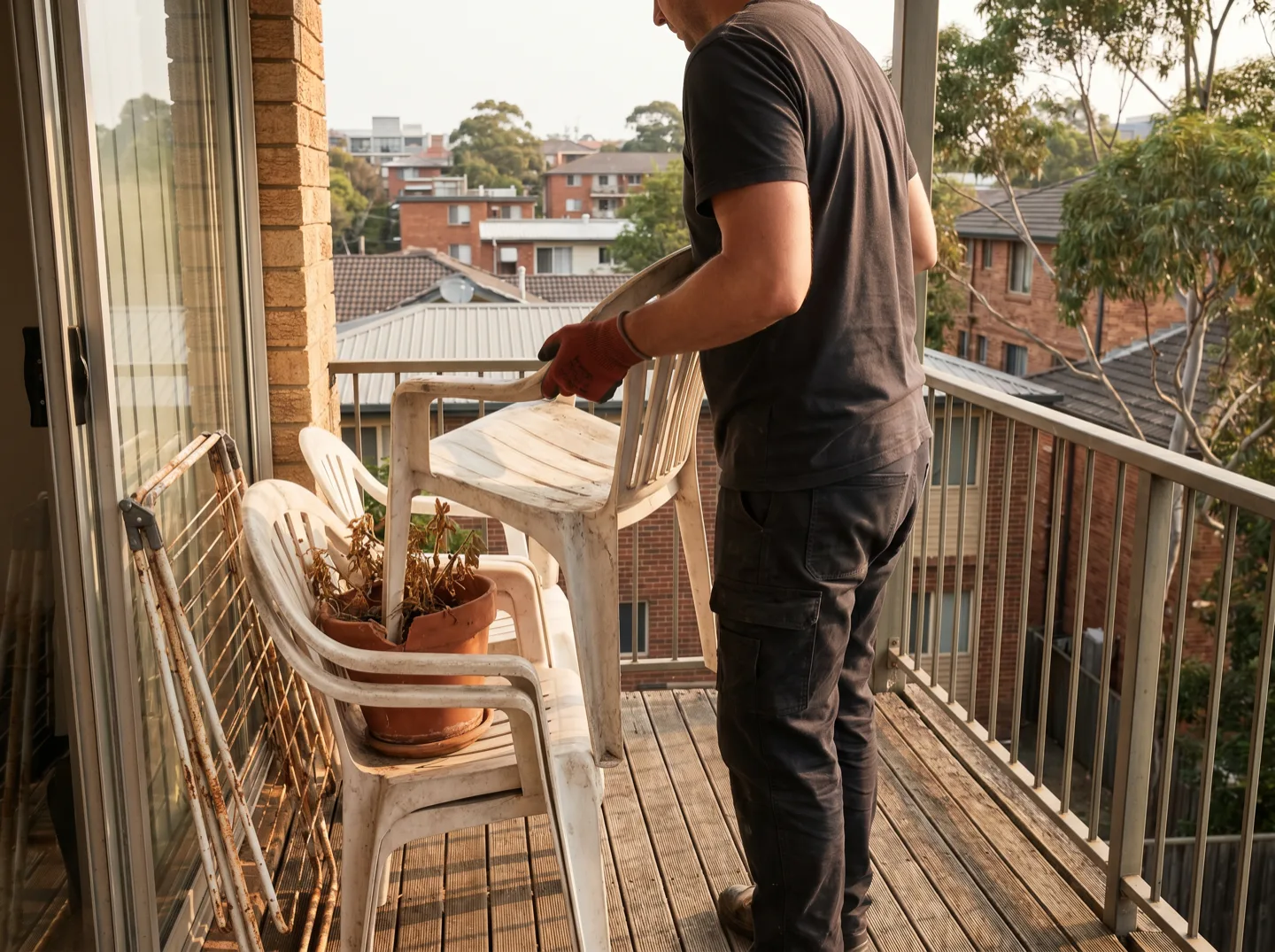
| The balcony | Chairs gone chalky from the sun, dead plants in cracked pots, the clothes airer rusted into one position. Balconies are on the condition report like any room. |
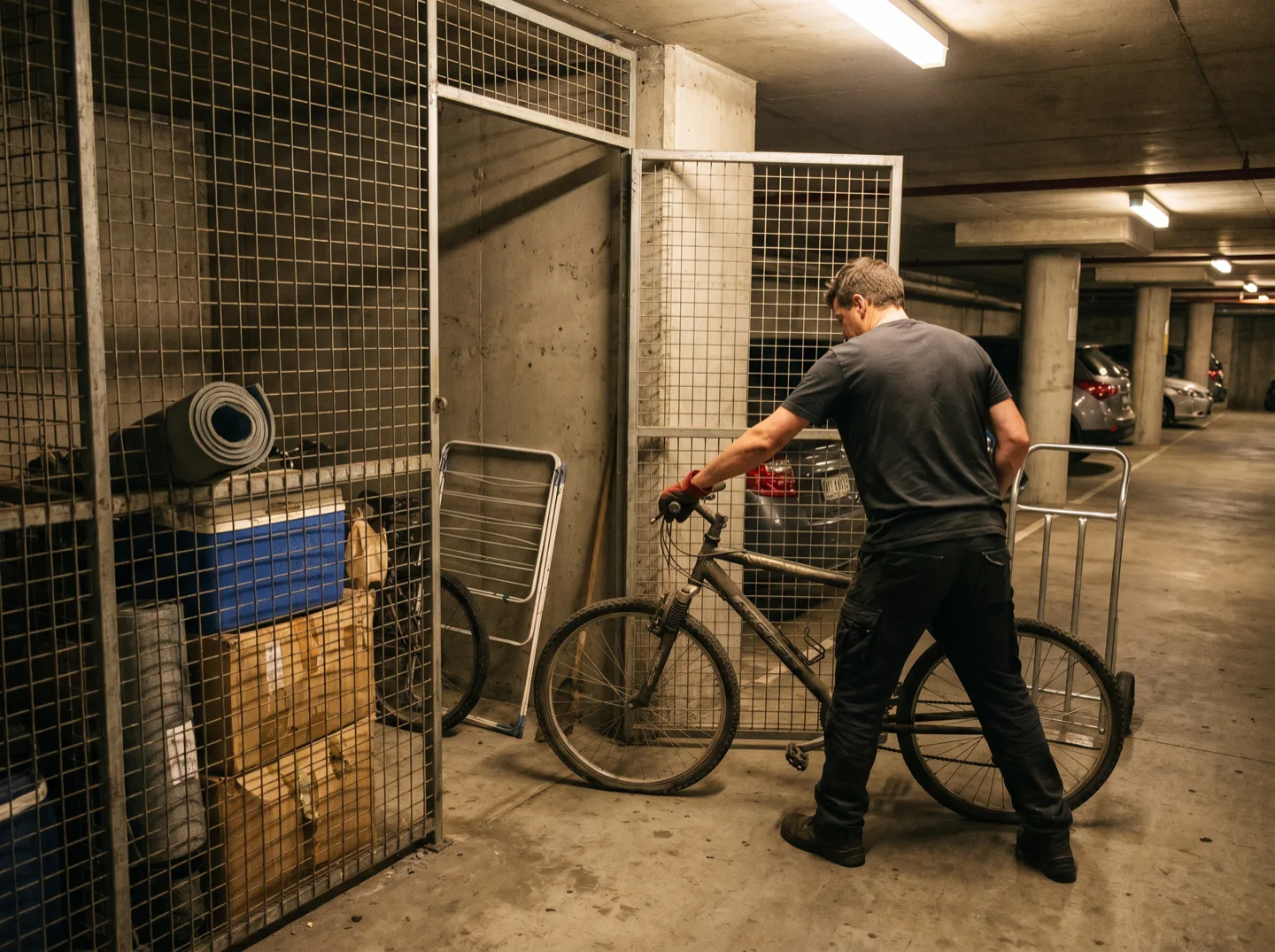
| The storage cage | The basement spot renters genuinely forget they filled: the bike, the esky, the boxes from the move in. If the cage is on your lease, it has to be empty. |
| The car space | Roof boxes, spare tyres, the shelf that never got mounted. An allocated space hands back empty, same as the unit. |
The two-envelope test
Walk the unit with two imaginary envelopes: coming with me and going on the truck. Anything you hesitate on for more than a breath goes on the truck. Hesitation is how a wardrobe of maybes follows you to three more addresses.
Booking the lift and the dock
In the apartment buildings on the Victoria Road and Wharf Road side of Gladesville, the building has opinions about how furniture leaves it, and the building wins. Getting this arranged early is the difference between a smooth clearout and a truck circling while a lift stays locked.
- Find the right person. That's the building manager if your block has one, otherwise the strata managing agent. Their details are usually on the noticeboard in the lobby or in your lease's contact pages.
- Ask for the service lift booking. Buildings generally want a few days' notice, and end-of-month weekends go first because every lease in Sydney seems to end on one. Ask whether the building hangs its own protective curtain in the lift or expects the crew to bring one.
- Ask for the dock or loading-bay window. Most blocks give a set window for a truck, and it's a window, not a suggestion. If there's no dock, ask where a truck can legally stand, because Victoria Road itself is not the answer.
- Ask what else the building wants. Some blocks ask for a refundable move deposit or a copy of the mover's details before they'll confirm anything. Better to hear that a week out than on the morning.
If we're doing the clearout, this whole list is ours: give us the building's details on the form and we book the lift, hold the dock window and time the run so the truck isn't sitting in Victoria Road's peak. That's the service version of this page.
Can the free council pickup do this job?
Honestly: almost never at lease speed, and we'd rather tell you that here than let you find out ten days short. City of Ryde's household cleanup is genuinely good for a planned pile, but it books about ten days ahead, takes up to 1.5 cubic metres per collection, and the five yearly bookings belong to the property, so in a rental the year's allowance may already be gone. Whatever the truck can't take must legally go back inside the property line, which on inspection morning is the opposite of progress.
If your leftovers are one small planned pile and your dates are generous, book it early and use it. For everything else in lease week, a dated pickup with the figure agreed in writing is what actually protects the bond. The full comparison is written down here.
Counted back from inspection day
Every date on this run sheet exists to protect the last one. Work backwards from the inspection and the week stays boring, which is the goal.
Split the unit into staying and going
Run the write-up list above, cage and car space first because they're the two everyone does last. If the going pile is small and planned, this is also the last comfortable day to book the council cleanup, because its lead time is about ten days.
Get the clearout priced
Send the job through with a phone photo of the going pile. You'll get one fixed figure in writing covering the carrying, the building arrangements, tip fees and the sweep-out, and you agree it before anything is booked, let alone lifted.
Lock the lift and the dock
The building manager confirms the service lift and the dock window, you or we hold them in writing, and the clearout lands on a day that leaves daylight between the truck and the inspection.
Everything out, everything opened
The load goes down through the booked lift and out through the booked window. Every cupboard is opened and checked on the way, the cage and car space are emptied, and the floors are swept. Photograph the empty unit before you lock it: your record exists before the agent's.
The final clean, in an empty unit
Cleaning an empty unit takes half the time and does twice the job. This is why the clearout doesn't happen the night before: the buffer day absorbs the final vacuum and anything the last walk-through turns up.
Hand back keys, not explanations
The agent walks into an empty, swept unit with open cupboards and nothing to write up. The bond conversation is short. That was the whole point of the fortnight.
What getting it wrong costs
No figures here, because we don't publish figures we haven't put in writing for a real job. But the shape of the cost is worth knowing, because none of it is priced kindly.
- Goods left in the unit. The agent has to arrange removal and disposal, on the clock and at commercial rates, and the cost comes out of your bond with their time on top. You pay retail for a job you could have priced calmly a week earlier.
- The bin-room shortcut. A couch left beside the shared bins doesn't disappear, it gets photographed. Strata charges the removal back through the building, the by-law letter follows you, and in a block with cameras it follows you quickly.
- The missed handover. If the unit can't be handed back on the date because the stuff is still in it, the days you hold it are days you pay for, on top of the rent already running at the new place.
Against all three, a clearout with the figure agreed in writing before anything is lifted is the cheap option, which is not something the loud end of this trade often gets to say honestly.
Asked by renters, answered straight
Do I really have to empty the storage cage and the car space?
If they're on your lease, yes. The walk-through treats them like any room, and they're the two spots most often written up because they're out of sight for the whole tenancy. Check them first, not last.
Can't I just leave the big stuff next to the building's bins?
No, and this one has teeth. Shared bins are for bagged household waste; furniture beside them is dumping on common property, and strata will charge the removal back and put a by-law letter behind it. It's the most expensive free option in the building.
How close to the inspection should the clearout run?
Two clear days is the comfortable answer: clearout, then the final clean in an empty unit, then the inspection. It can run tighter when the calendar forces it, but every day of buffer you give up is a day with no room for surprises.
I found more stuff after the clearout. Now what?
Tell us before inspection day, not after. A late find is usually a small second run, and it gets the same treatment as the first: the revised figure named in writing before anything moves. What we won't do is guess, and what you shouldn't do is leave it for the walk-through to discover.
A straight answer costs nothing
Tell us what needs to go and where it is. We come back with a plan and a fixed price, in writing, and nothing gets lifted until you have agreed it.
Your enquiry goes straight to the crew, and we ring you back on the number you leave.