

Garage, shed & under-house cleanouts in Gladesville
The garages and under-floor spaces up on the ridge hold decades, and clearing one is not a job for a crew on an hourly meter. We look at what's there with you, write one fixed figure for the lot, and nothing leaves the property until you've agreed the price and the pile.
 Priced by looking at it, never by the hour. The figure can't grow while your back is turned.
Up here, thirty years is normal
The brick house streets on Gladesville's high ground, the Ashburn Place and Batemans Road and Cambridge Street pockets, were built between the 1920s and the 1960s, and plenty of them have been held by the same family for a good stretch of that. A house like that doesn't have clutter. It has strata: the camping gear on top, the kids' furniture under that, the timber offcuts a careful father kept, and somewhere near the bottom, a pram nobody has needed since the moon landing.
Nobody rings us because the garage is full. It's been full for years and it bothered no one. The call comes when something changes: the house is being sold, a downsize is finally on, the council pile got knocked back, or you'd simply like the car to live indoors again. When that day comes, the job deserves to be done properly, at your pace, by people who understand that they're the guests.
These cleanouts are a big part of our week, and most of them happen on weekdays while the owner is home to point and decide. Nearly half of Gladesville works from home now, which suits this job perfectly: it's a job that goes better with you in it.
Priced by looking, not by the hour
An hourly meter loves this job. Under-floor carries are slow, garages hold surprises, and on an hourly rate every slow minute bills to you. That's the wrong incentive to walk onto someone's property with, so we don't bring it. The price is set by looking at the load, before work starts, and it goes like this:
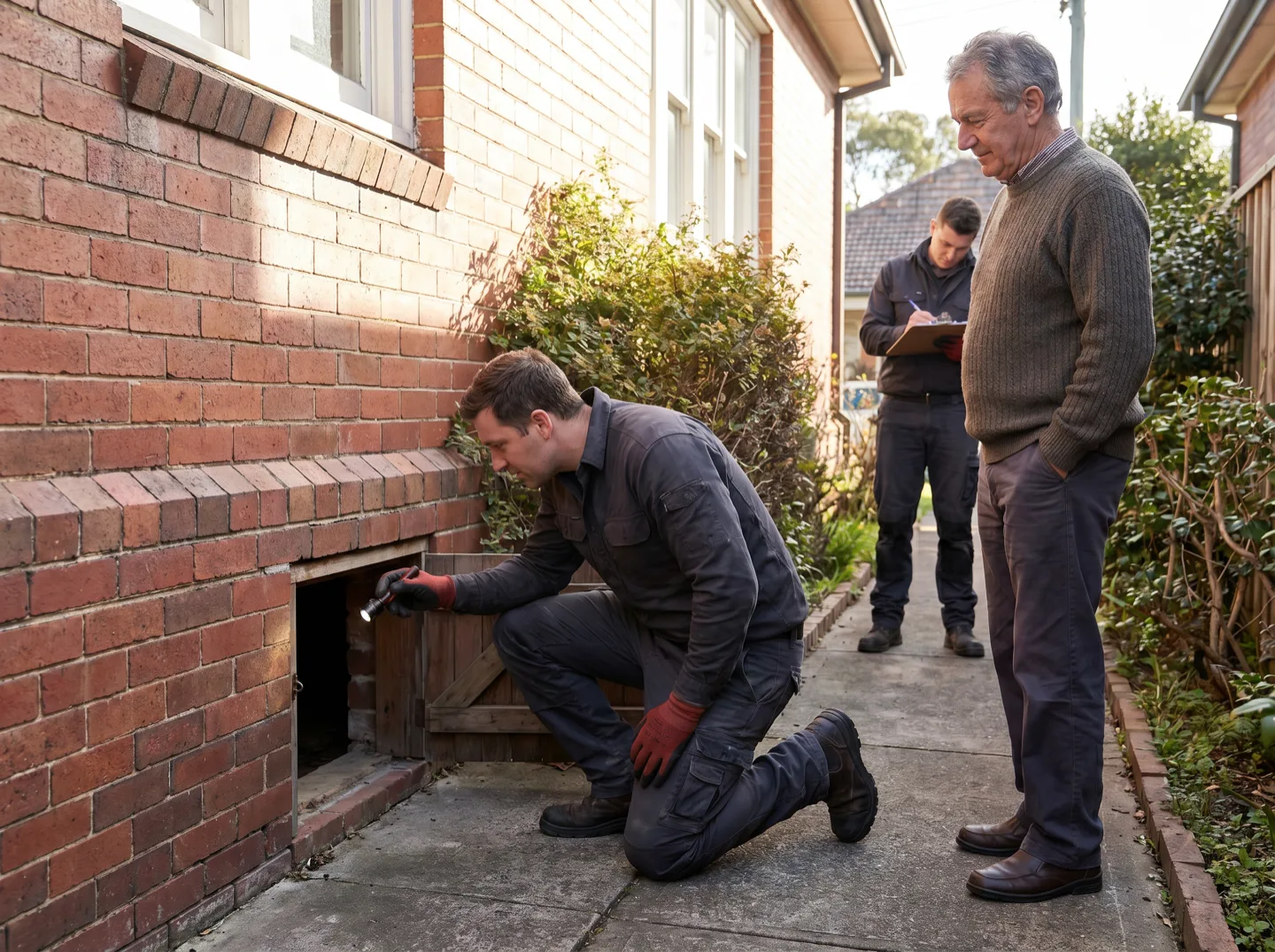
We look at it with you
The garage, the shed, the space under the floor. Torch and quote pad, usually ten minutes or so. You point, we ask, and anything you're not sure about stays a question, not a decision.
The figure goes on paper
One fixed price for the whole job: the crawling, the carrying, the truck, the tip fees, the sweep-out. It's written down and handed over, with what it covers named on the sheet.
You agree before a glove touches the pile
Keep the sheet. Sleep on it if you want to; the written figure holds. And if the answer is no, we shake hands and drive off. The look costs nothing and nobody gets leaned on.
If the job grows, the quote comes first
Sometimes the far corner under the house holds more than any torch could show. When that happens we stop, show you, and re-quote before we keep going. Nothing gets loaded first and priced second.
The garage, the shed, and the space under the floor
The garage
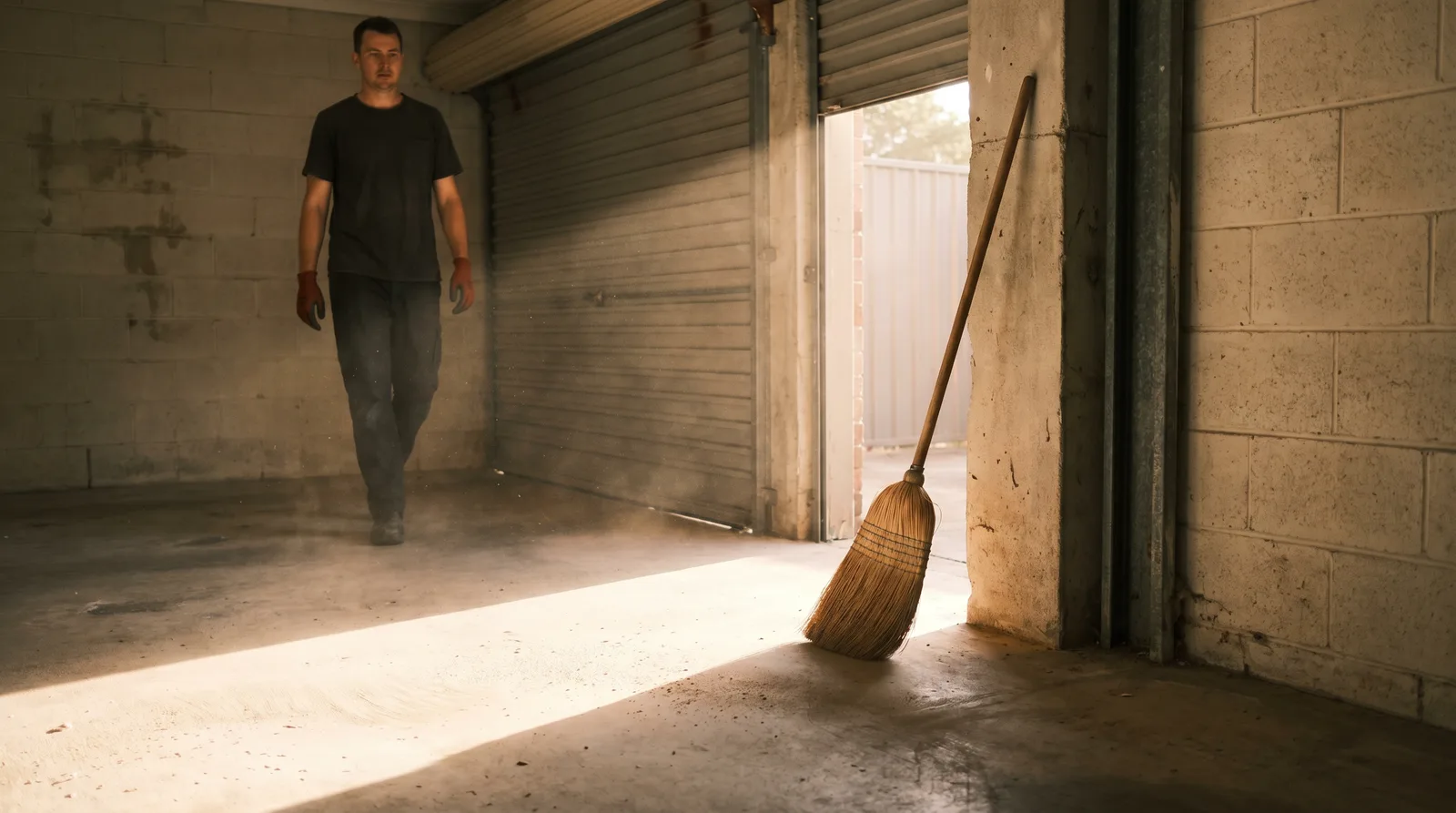
The roller door goes up and the sorting happens in daylight, on the driveway, where you can see every decision being made. Keep, go, and ask-me-later each get their own patch of concrete. The truck takes the go pile, the keepers go back neatly, and the floor gets swept before the door comes down.
What comes out is rarely a surprise to anyone: the wall of boxes from the last move but one, the exercise gear, the retired barbecue, offcuts from every project since the fence went up. What surprises people is how fast a garage empties once the deciding is separated from the carrying. You decide. We carry.

The shed
The fence-line shed is its own archaeology: garden tools in working order, garden tools well past it, potting benches, cracked hoses, and the shelf of half-used tins every shed in Sydney seems to grow. We clear the lot, and the tins get handled honestly rather than quietly tipped on the truck. Old paint, fuel and garden chemicals have their own proper disposal routes, and we'll name where each one should go.
If the shed itself is coming down afterwards, say so when we look. An empty shed and a cleared slab are different finishes, and the figure should say which one you're getting.
Under the house: the honest version
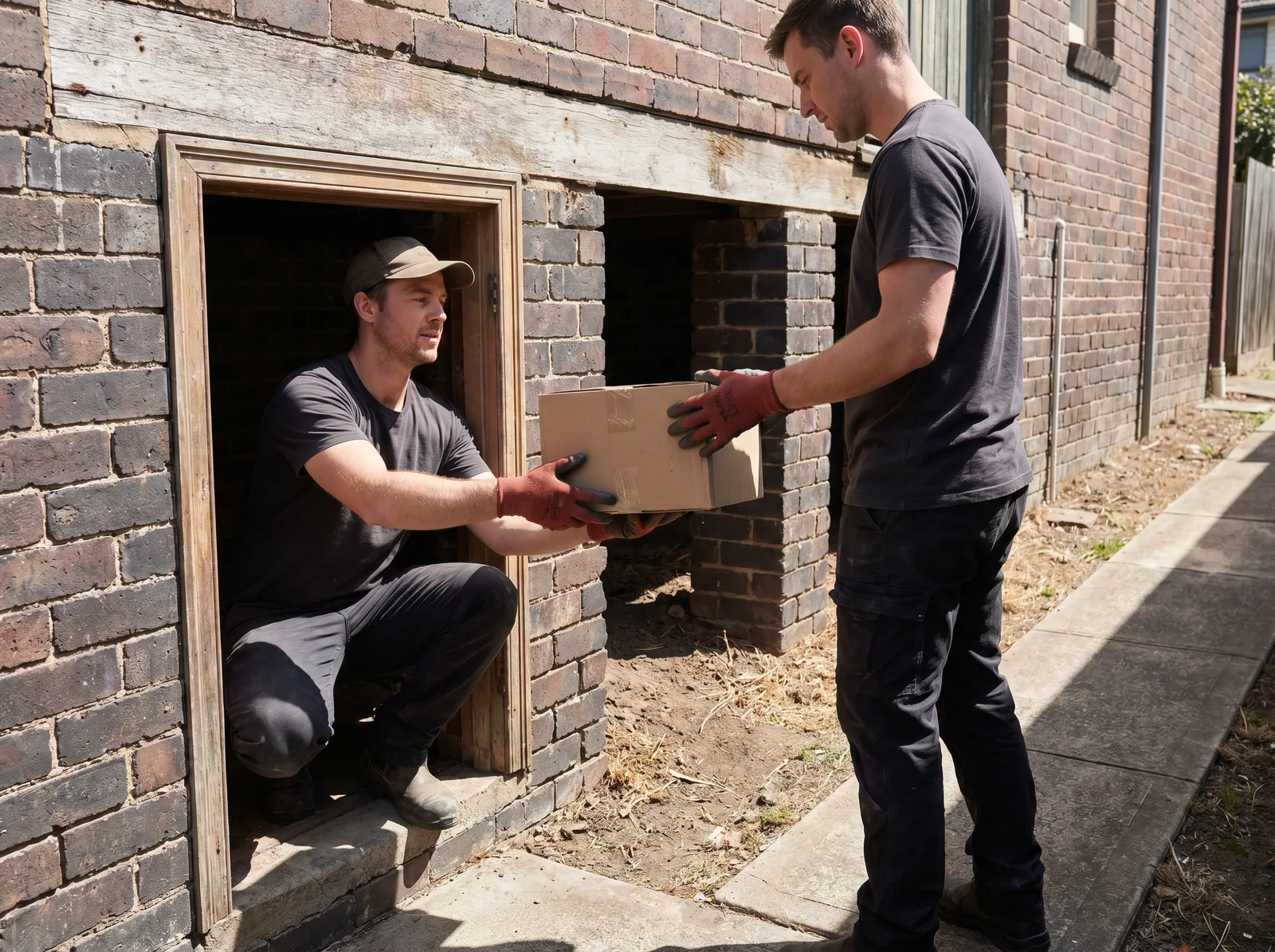
Most of the ridge houses stand on brick piers, and the space between the piers has been swallowing things since the roof went on. Getting it all out again is real work, and it's worth knowing what that looks like before you invite anyone under there:
- The way in is the little door off the side path. Everything comes out the same way it went in, one carry at a time.
- Clearance is measured in bearer heights, not ceilings. Some of it is a crouch, some of it is a crawl. We bring boards, torches and knee pads, and we plan the passing chain before anyone goes under.
- We crawl. You don't. Your job is to stand in the daylight and rule on what emerges.
- It's dusty, and we treat it that way. Decades of settled dust comes up with the load, so things get carried clear and wiped before you're asked to make calls on them.
Slow, careful work, in other words, which is exactly why it's the wrong job to buy by the hour. Our figure is fixed before the first carton comes out, so the crawl being slow is our problem, not your bill. The full walkthrough is written down as a guide.
What goes, what stays, what waits
The worry on this job is rarely the price. It's a stranger with a truck making quick decisions about fifty years of a household. So the sorting runs to rules, and the rules favour you:
| In the pile | What happens to it |
|---|---|
| The obvious junk | Onto the truck, once the figure covering it is agreed. This is most of the load and it moves fast. |
| Anything that might matter | Photo boxes, tools, paperwork, medals, the tin with the handwriting on it: set aside unopened and shown to you before it goes anywhere at all. |
| The maybes | Their own pile, revisited once at the end, decided at your pace. A maybe is never rounded up to a yes because the truck is nearly full. |
| The old fridge and the dead TV | Set apart from the general load for the regulated route, a licensed facility at the end of it. Inside the one written figure. |
| The genuinely hazardous | Not on our truck. Named, pointed out to you, and steered to the people licensed to handle it, while the rest of the job carries on. |
Found under the house, not on the truck
Houses of this age sometimes keep leftover fibro sheets or offcuts under the floor. If we see anything we suspect is asbestos we stop on that spot, photograph it, and point you to a licensed asbestos removal contractor for that part of the job. Carrying it on a junk truck would be illegal, and telling you straight beats finding out later. Everything else under there is ours to deal with.
The council option, measured against a garage
Fair's fair: City of Ryde runs a free pre-booked household cleanup, and for a small planned pile it's the right call. We'll tell you so. But measure it against this job before you count on it: each collection is capped at 1.5 cubic metres with nothing longer than two metres, a single garage bay holds several times that, bookings need about ten days' notice, there are five per property per year, and whatever the truck can't take legally has to come back inside your boundary. A refused pile on the nature strip is usually the phone call we get next.
Use the scheme for the single old couch you can plan around. When it's a garage's worth with a settlement date attached, that's the job we quote. The full comparison is written down.
Asked at the roller door
Do I need to sort it before you come?
No, and please don't lift a thing on our account. The pile as it stands is the job we quote. If sorting it yourself first would give you peace of mind, that's a different matter, but it earns no discount and costs you a weekend.
Can you price it from photos instead?
For a garage or shed, a few phone photos often get us all the way to a firm written figure. Under-house spaces we prefer to look at in person, because the access decides the work and a photo can't show bearer height. Either way the look costs nothing and the figure comes in writing before anything starts.
We're keeping half of it. Is that a problem?
It's the normal shape of this job. Tell us what's staying when we look, or decide pile by pile on the day. The figure only ever covers what's going, and the keepers get stacked back where you want them, not left where they landed.
I don't want to be hurried into decisions on the day.
Then we're the right crew. The figure is fixed before we start, so there's no meter running while you think. Maybes go into their own row and get looked at again calmly at the end, and anything that looks like it matters is shown to you before it moves. If you'd rather split the job over two visits so decisions can breathe, we'll quote it that way.
How long does an under-house cleanout take?
Longer than the garage, honestly. Everything comes out by hand through the access door, so a full under-floor space can take the better part of a day where a garage is often a morning. The fixed figure means the slow parts cost us, not you, which is rather the point of it.
A straight answer costs nothing
Tell us what needs to go and where it is. We come back with a plan and a fixed price, in writing, and nothing gets lifted until you have agreed it.
Your enquiry goes straight to the crew, and we ring you back on the number you leave.