

Deceased estate & whole-house clearance in Gladesville
Clearing a family home is not a rubbish job, and we don't run it like one. It happens slowly, in the order you set, with anything that might matter set aside and checked with you before a single thing goes on the truck.
 Nothing leaves the house until it has been set aside, checked and agreed.

A different job, treated differently
Most of these calls come from an adult son or daughter, ringing between other arrangements, sometimes from another state with one week set aside and a return flight already booked. The house is usually one of the long-held ones: a parent's place in Hunters Hill or up on the Gladesville ridge streets, holding forty or fifty years of a family's life, and now also holding a deadline, because an agent or a solicitor has started asking about dates.
Two things shape how we do this work. The first is that the house sets the pace, not the truck. Rooms are cleared in the order you choose, you can stop us at any point, and if a day needs to end early because it got hard, it ends early. There is no schedule of ours that outranks that.
The second is practical. The figure for the whole clearance is agreed in writing after we've walked the house together, and it doesn't run by the hour. That matters more here than on any other job we do: it means nobody is standing behind you with a clock while you decide about a box of photographs.
Set aside and checked, before anything leaves
Before anything is carried out, we go through the house for the things that might matter: photographs, letters, certificates and deeds, jewellery, medals, the paperwork drawer, anything with a name or a face on it. All of it is gathered into one room, and that room stays untouched until you or your family have been through it.
Fifty years in a house also means things end up in unlikely places. We've learned where to look:
- Inside books. Money, letters and loose photographs slide between pages, so every book is fanned open before it's boxed.
- Coat pockets and handbags, including the coats at the back of the wardrobe that haven't moved in years.
- Biscuit tins and sewing boxes, which are almost never biscuits or sewing.
- Taped under drawers or tucked behind the sideboard, where careful people put important things.
- Boxes labelled as something else entirely. The carton marked Christmas is opened before it's counted as Christmas.
Anything found this way stops, and goes straight to the set-aside room. If you're not at the house, it's photographed and you hear about it the same day, not after settlement.
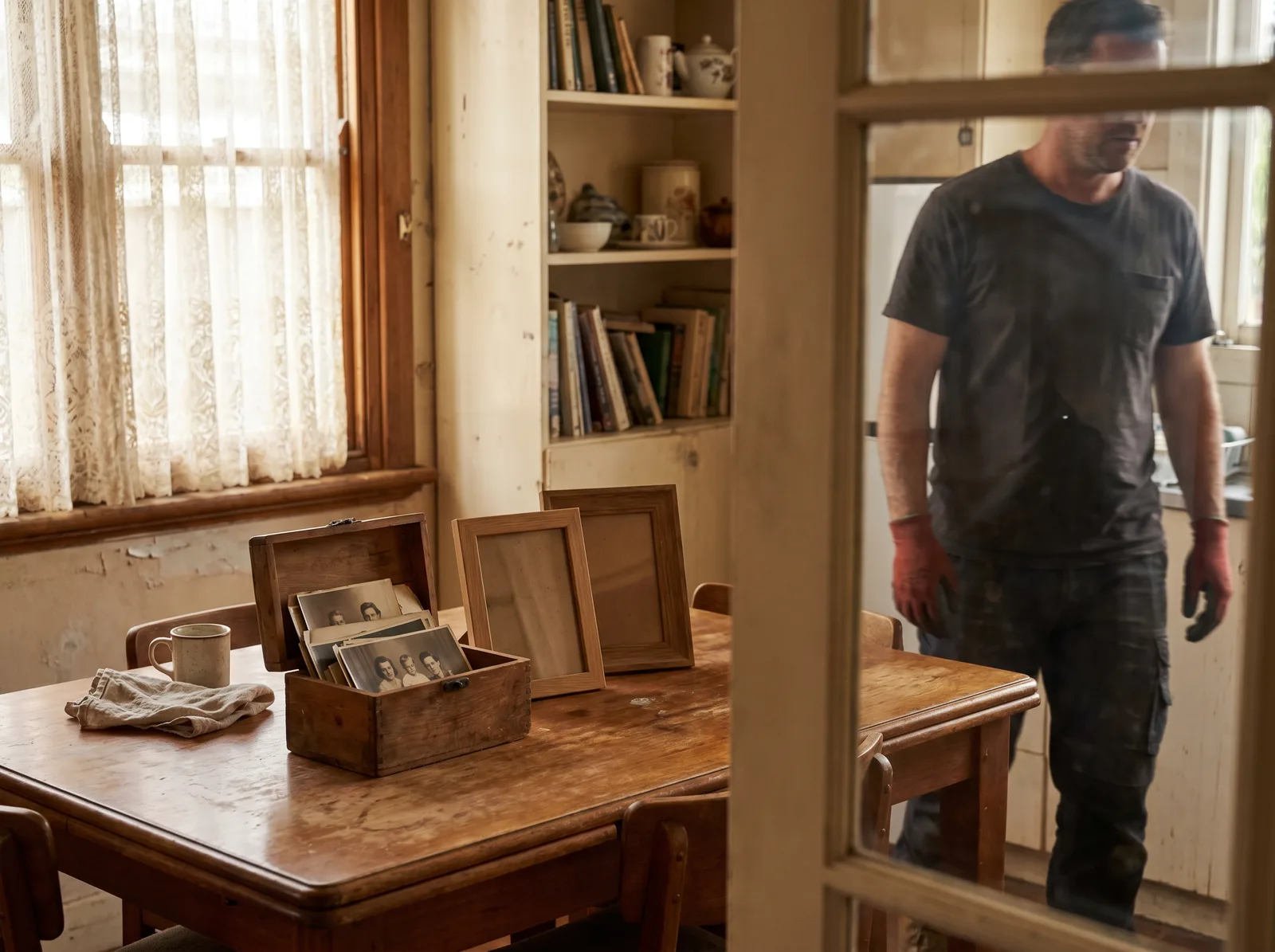
How a clearance runs
Every estate is its own shape, but the order below holds for nearly all of them. The full version is written down calmly in our house-clearance walkthrough, if reading ahead helps.
A walk through the house, together
At the house if you're in Sydney, on a video call if you're not. You tell us what the house was, what's spoken for, and what you're unsure about. We listen more than we count.
A written plan you can hand to the family
What gets set aside, what's offered on to charity, what goes, and in what order, with one figure for the whole job. It's on paper, so the relative who couldn't be there can read exactly what was agreed.
The set-aside pass, first
Personal things gathered into one room before any clearing starts. Photographed room by room if you're away, and left exactly where they are until you've said so.
Rooms cleared in your order
Furniture with use left in it is offered where it can be used, where that's what you want. The fridge and the televisions come off the general load and go on their regulated routes. The rest goes quietly onto the truck, not into a skip on the front lawn.
Swept, closed, keys back
Floors swept, cupboards left open and empty, keys returned to you or the agent. Ready for the photographer, for settlement, or just to sit quiet for a while.
If you're arranging this from a distance
Plenty of the families we do this for aren't in Sydney at all. The parent's house is here, on the peninsula; the family is in Brisbane, Melbourne, Perth, or overseas, trying to organise a clearance around leave from work and the price of flights.
It works like this: the first walkthrough happens on a video call, keys come to us through the agent, the solicitor or a neighbour you trust, and the set-aside room is photographed in full before anything else in the house moves. If you're flying in for a few days, we plan the work around them, so your time in the house is spent going through the set-aside room, not carrying wardrobes. You deal with one person from first call to keys-back, and everything agreed exists in writing.
Working in with the agent or the solicitor
If the house is heading to sale or settlement, we're happy to take the practical arrangements off you: keys through the agency, timing worked back from the dates you give us, and a written record of what was done and when, for whoever is keeping the file.
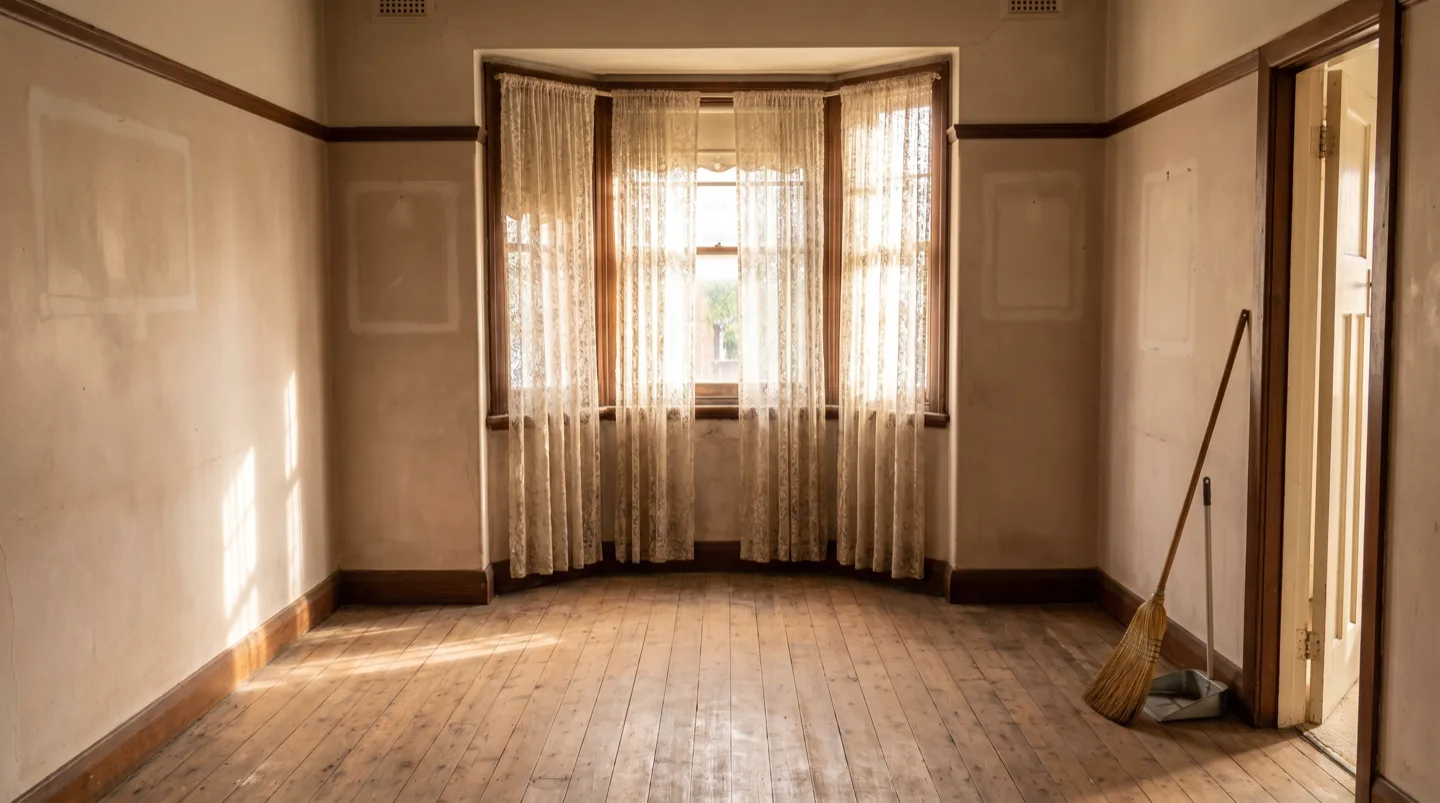
The house, left ready and left quietly
A clearance shouldn't announce itself to the street. No skip sits on the front lawn for a fortnight telling the neighbourhood what's happening; everything is loaded straight onto the truck, and the truck comes when you've agreed it should.
Where you want it, furniture and household goods with use left in them are offered to charity rather than tipped, and we'll tell you plainly what the charities will and won't accept, because they're plain with us. Whitegoods and e-waste go to the facilities that handle them properly. What's genuinely finished goes as waste, sorted the way it's supposed to be.
Then the floors are swept, the windows are shut, and the keys go back to whoever should hold them. Much of this work is next door in Hunters Hill and along the ridge streets, where a house has often held one family for decades; we've learned that how the house is left matters nearly as much as what was taken away.
Questions families ask
Do we need to be there while the house is cleared?
No. Many families do the first walkthrough with us and leave the rest to run while they're back at work or back interstate. The set-aside room is photographed before clearing starts, anything found along the way is added to it and you're told the same day, and nothing in that room leaves until you've been through it, in person or by photo.
We're not ready to decide about everything yet. Is that a problem?
It's normal, and the job is built for it. The set-aside room only ever grows; anything you're unsure about goes into it rather than onto the truck. If part of the house needs to wait weeks or months while the family talks, we clear what's decided and come back for the rest. There's no meter running on your deliberating.
What happens if you find something valuable, or something personal?
The work stops and it goes to the set-aside room: cash, jewellery, documents, war medals, the letters in the biscuit tin. If you're not at the house it's photographed and you hear about it that day. We're not valuers and won't pretend to be; when something looks like it should be looked at properly, we say so and set it aside rather than guessing.
Can some of it go to charity instead of the tip?
Yes, and for most estates a fair amount does: sound furniture, kitchenware, linen, tools. We'll be straight with you about what the charities will actually take, so nothing gets promised a second life it won't have, and nothing personal ever goes out in a general load unchecked.
How long does a whole house take?
It depends on the house, and we'd rather say so than invent a number. The walkthrough settles it: a plan in days, in writing, worked back from any dates the agent or solicitor has set. We'd sooner take a day longer than have you feel hurried through your parent's house.
We only need part of this. Can you clear just a shed, or just the furniture?
Yes. Not every estate needs the whole-house version; sometimes the family has taken what matters and what's left is one garage, or the big furniture nobody has room for. We do exactly the part you need, with the same care and the same written figure first.
Whenever you're ready
There's no urgency from our side, and an enquiry doesn't commit you to anything. Tell us as much or as little as feels right. If it's easier to start with a question than a booking, start with a question; we'll answer it plainly and leave the rest with you.
Your note goes straight to the crew, and we reply on the number or email you leave. If the timing isn't right yet, the guide below covers most of what families want to know first: how a whole-house clearance runs.