

Where the TV and the dead fridge actually have to go
Neither of them can ride the red bin, and neither of them automatically needs us. This guide is the whole map: the paths that cost you nothing, the NSW rules underneath them, and the honest case for a paid pickup, which comes last on purpose.
 If a free path fits your job, this page says so. The pickup is for when none of them do.
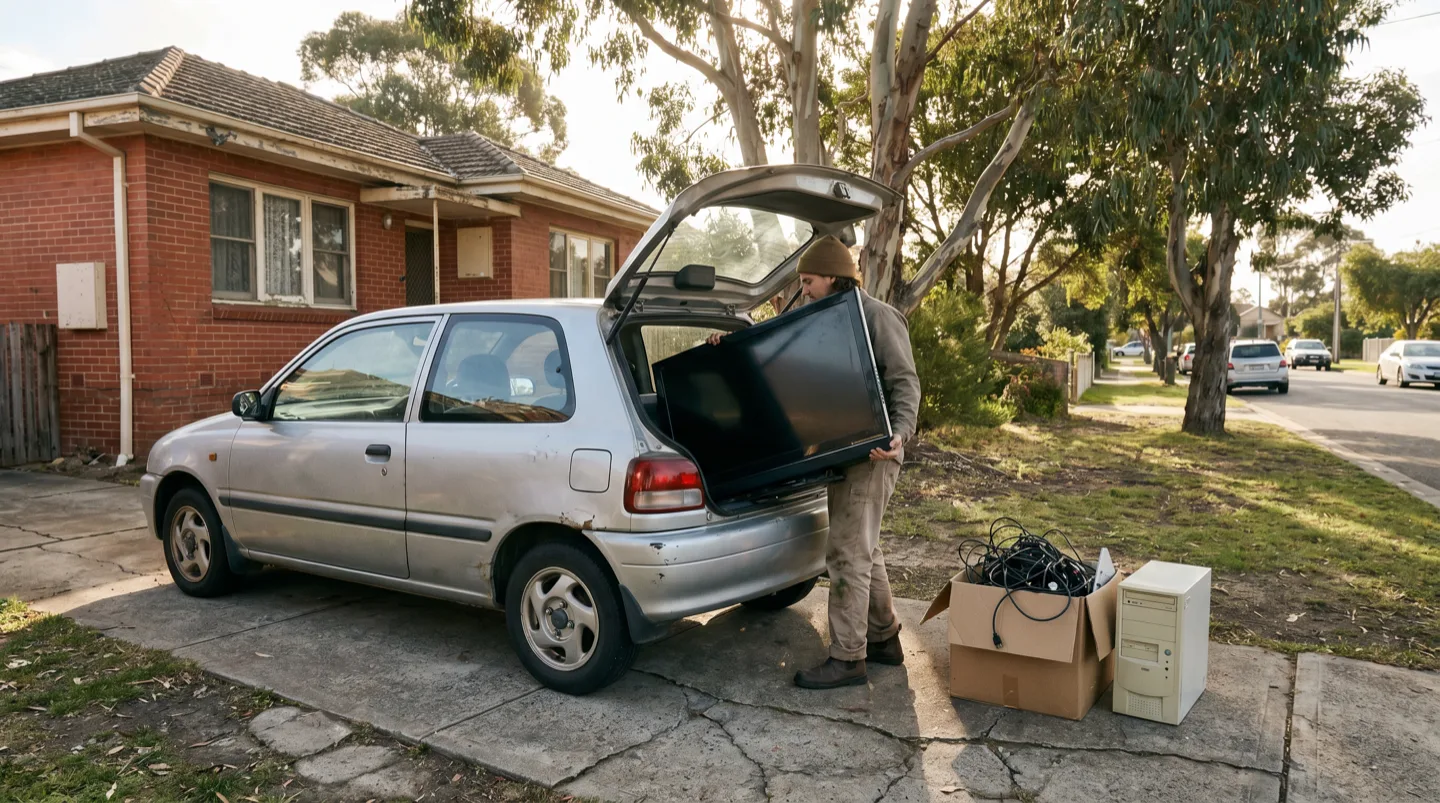
Why the red bin says no
Everything in the red bin gets compacted and buried, and three things in the average dead-electronics pile must not be. Not council fussiness; chemistry.
- Refrigerant gas. Fridges, freezers and air conditioners hold gas that has to be recovered by a licensed technician before the shell is scrapped. Crush one whole and the gas simply vents.
- Screens and circuit boards. TVs, monitors and computers carry lead, mercury and other metals that leach once buried, so e-waste travels a separate, regulated path from the moment it leaves your door.
- Batteries. Loose lithium batteries start fires in trucks and sorting sheds. They never belong in any bin, ours included.
Underneath all of it sits a NSW rule called the duty of care: a load has to reach a place lawfully entitled to take it, and everyone who handles it along the way shares the responsibility. The NSW EPA spells it out. In practice it means the question is never whether the TV goes somewhere special. It's who does the driving.
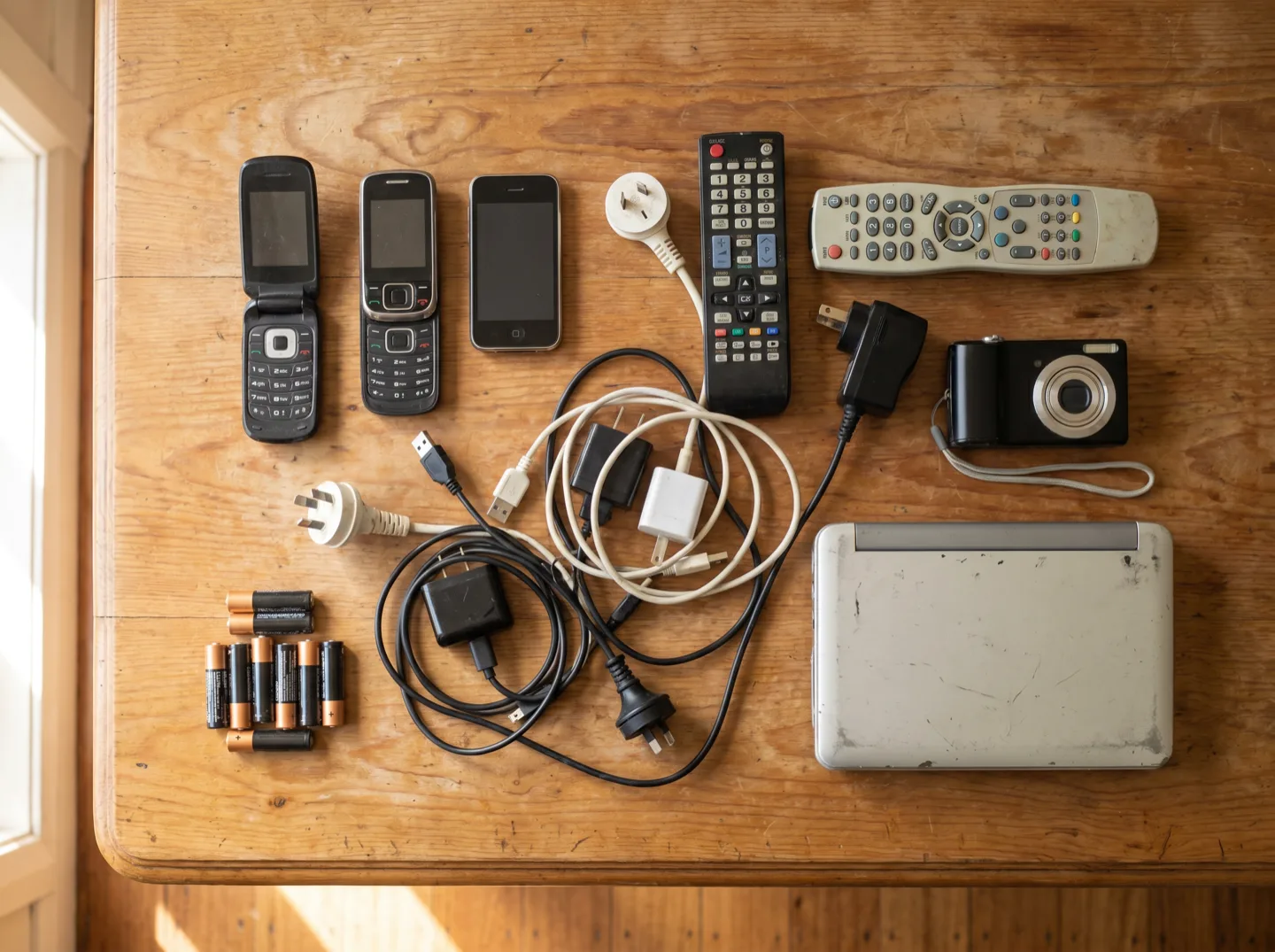
Four ways to lose it for nothing
In the order we'd try them for your job. A rubbish company telling you how not to hire one is exactly the kind of quote-first dealing the name promises.
The takeback truck
If a replacement appliance is already on order, most retailers will cart the old one away when they deliver the new one, so long as you arrange it when you buy. It's the cheapest removal that exists, because the truck was coming anyway. Tick the box, have the old unit empty and unplugged on the day, done.
The national drop-off for TVs and computers
TVs, computers, laptops and printers have free drop-off points under a national recycling scheme paid for by the companies that sell them. Any age, any condition, no proof of anything required. Your council's website lists the nearest points. If it fits in the boot and there's no deadline attached, this path costs you the drive and nothing else. Wipe your data first; that job stays yours on every path, including ours.
The council cleanup
On the City of Ryde side, each property gets five free pre-booked collections a year, capped at 1.5 cubic metres per collection and booked around ten days ahead through ryde.nsw.gov.au. Three catches worth knowing before you drag anything out: the bookings belong to the property, so in a rental the year's allowance may already be spent; the scheme lists what a collection accepts, so check your item is on it when you book rather than assume every appliance rides; and anything the truck leaves behind is legally yours to bring back in off the strip. Gladesville addresses also split between two council areas, so confirm which council you're actually under first. The full comparison is written down.
The battery cube
Household batteries, phone batteries and the dead vapes of visiting nephews go in the battery drop-off cube most big supermarkets and hardware stores keep near the door. Free, and a walk rather than a truck. This is the one item on this page we'll never load, and nobody honest will.
If one of those fits your job, use it. This page stays here either way.
Which path takes what
The same map, item by item. The middle column is the one to try first.
| The item | The free path | When a pickup makes sense |
|---|---|---|
| TV or monitor | The national drop-off, any age or condition. | It's part of a bigger clearout, or there are three flights between it and the car. |
| Computer, laptop, printer | Same drop-off scheme. Wipe it first. | The whole office corner is going at once. |
| The drawer of dead phones and chargers | Rides free to the same drop-off. | On its own, honestly never. It rides along when we're already carrying a load. |
| Household batteries | The supermarket drop cube. | Never. Loose lithium doesn't belong on anyone's truck, ours included. |
| Fridge or freezer | Takeback when the new one's on order; a council slot if the booking accepts it and the timing holds. | It has to be gone this week, it lives under the house, or it's leaving with an end-of-lease load. |
| Washer, dryer, dishwasher | Takeback on delivery of the replacement. | No new one is coming; it's just dead and in the way. |
| Oven or air conditioner | Takeback where offered. Hardwired or gas-holding units need the right trade to disconnect or degas first. | Most of the time; these two genuinely are licensed-route jobs. |
Anything still ambiguous, ask us straight: send a photo through the form and we'll name the path even when the path isn't us.
The two rules underneath all of it
The gas comes out first. A fridge, freezer or air conditioner isn't scrap metal until a licensed technician has recovered the refrigerant. That's the step every legitimate route pays for, and the step every too-good deal skips. It's also why "the scrappers will grab it off the kerb" isn't a disposal plan: the shell gets weighed in, the gas gets vented on the way.
E-waste lands at a licensed facility. Screens, boards and casings get separated at facilities licensed to receive them, not tipped with the general load. NSW's duty of care puts the destination on whoever carries the waste, so when we carry yours, where it lands is ours to answer for. We treat that as the job, not a favour, and we don't dress it up with a recycling percentage we've never audited.
The kerb is not a path
An unbooked pile on the nature strip is illegal dumping, and councils fine for it. The booked council cleanup is the legal version of the same idea; the only difference is a booking number and ten days' patience.
When the paid pickup earns its place
Four situations, and it's usually one of these rather than all of them:
- A date is attached. The lease ends Friday, or the new fridge lands Thursday. Free paths run on their own calendar; a deadline doesn't.
- Geography is against you. Three floors and a lift booking between the fridge and the street, or a chest freezer under a ridge-street house that went in before the deck went on.
- The free allowance is gone. The load is past the cleanup cap, the year's bookings are spent, or the item isn't on the accepted list.
- It's riding with a bigger load anyway. One truck, one figure, appliances and their regulated route included, instead of three separate errands.
When it is us, the shape is the same as every job on this pad: you send what's going and which floor it's on, one fixed figure arrives in writing with the carry-out, any lift or dock arrangement and the regulated route's fees inside it, and you agree it before anything is lifted. How the white goods and e-waste service runs.
Asked about the disposal run
Can I just put the fridge out the front? Someone always takes them.
Without a council booking, that's illegal dumping, and the someone who takes it is weighing in the shell with the gas still inside. If the timing fits, book a cleanup slot and put it out legally. If the timing doesn't, that's the exact gap a paid pickup exists to fill.
Does the free council cleanup take fridges and TVs?
Schemes publish what a collection accepts and how items have to be presented, and it changes, so check the list when you book instead of assuming every appliance rides. Two Gladesville-specific wrinkles: addresses here split between two councils, so confirm whose scheme you're under; and for a TV, the national drop-off is usually the better route anyway, because it runs on your calendar rather than the truck's.
What about the data on the old laptop?
Wipe it before it leaves the house, whichever path it takes. Sign out of accounts, run the factory reset, pull the SIM and memory cards. Recycling facilities shred drives, they don't read them, but the wiping is still yours to do: we remove e-waste, we're not a data-destruction service, and we won't pretend otherwise.
Scrap metal is worth money. Why does removing a fridge cost anything?
Because the gas has to come out first, by a licensed technician, and the carry has to happen, usually through a doorway that argues back. A dead fridge's scrap value doesn't cover either. Anyone whose price only works by skipping the degassing step is skipping the one step the rules exist for, and that's not a saving we'll compete with.
The TV still works. Should it really go to the drop-off?
Not yet. A working TV isn't waste; list it free-to-collect online or ask a charity that does pickups. If it's still there after the week, it was e-waste all along, and the drop-off or our truck settles it.
A straight answer costs nothing
Tell us what needs to go and where it is. We come back with a plan and a fixed price, in writing, and nothing gets lifted until you have agreed it.
Your enquiry goes straight to the crew, and we ring you back on the number you leave.